Plastic and Resin Pool Pump Covers
Plastic and resin covers are popular because they do not rot and usually require little refinishing. Their performance varies widely, however: thin privacy panels, molded motor shelters, and full resin storage enclosures are built for very different jobs.
Compare usable interior dimensions, UV resistance, panel stiffness, vent area, door opening, and anchoring points. A lightweight resin cover may be easy to install, but it must remain stable in wind and cannot press against hot or vibrating equipment.
Specific Covers and Enclosures to Compare
These products represent different solutions rather than interchangeable versions of the same cover. Compare the intended use first: a compact motor hood, an open privacy screen, a seasonal fabric cover, and a purpose-built acoustic enclosure solve very different problems.
| Product | Best For | Advantages | Limitations |
|---|---|---|---|
| Universal Pool & Spa Pump Motor CoverCompact molded ABS motor shelter | Rain and sun protection for exposed motors | About 13 × 8 × 8.5 inches and marketed for roughly 1/3- to 2-HP motors; snap-together construction. | Covers only the motor area, not a complete pump/filter system, and is not a soundproof enclosure. |
| RunNico Pool Pump Motor CoversLightweight ABS motor covers sold as a two-pack | Budget weather protection for small exposed motors | Includes a cut-out template so plumbing openings can be adapted to the installation. | Fit must be measured carefully; lightweight construction needs secure placement and provides little noise reduction. |
| Suncast FSW4423 Resin Wicker Screen EnclosureFour-panel resin privacy screen with steel posts | Flexible decorative screening around a larger pad | Panels can be arranged in different shapes and resin needs little routine finishing. | Does not cover equipment from rain and should not block the service side or vents. |
| Keter Store-It-Out MAX 1200LFront-and-top-opening weather-resistant resin store | Adaptable large enclosure shell where extensive modification is practical | Wide front doors and a lifting lid can provide useful access around compact equipment. | Not designed as an operating pump enclosure; it requires engineered ventilation, plumbing cutouts, anchoring, and equipment-clearance review. |
Important: Storage sheds and privacy screens are included as adaptable enclosure ideas, not as automatic approvals for operating pool equipment. Confirm ventilation, drainage, electrical access, heater requirements, and manufacturer clearances before modifying or enclosing the pad.
To compare common molded sizes and access styles, browse resin outdoor enclosures on Amazon and check inside dimensions carefully so plumbing, lids, controls, and ventilation are not crowded. As an Amazon Associate I earn from qualifying purchases.
Check Panel Stiffness and UV Exposure
Resin products range from thin privacy screens to reinforced outdoor storage enclosures. Press gently on display panels, inspect connection points, and look for UV-stabilized materials suited to year-round sun.
Dark colors may absorb more heat, while pale panels can show algae or staining. Neither color substitutes for ventilation and routine cleaning.
Measure the True Interior Envelope
Molded ribs, hinge hardware, lid supports, and sloped tops reduce usable interior dimensions. Compare the narrowest door opening and lowest roof point with the pump, filter, and plumbing.
A product that fits the motor footprint may still prevent the pump lid from lifting or the filter clamp from being removed.
Anchor Lightweight Enclosures Correctly
Resin resists rot but its low weight makes wind anchoring critical. Use the base and fastener method specified for the product and installation surface.
Do not depend on equipment pipes to hold a cover in place. Movement can strain unions, conduit, and valves even when the enclosure itself is undamaged.
Account for Heat Movement and Molded-Panel Limits
Resin panels resist rot and are easy to wash, but large panels can bow, expand, fade, or become brittle after long ultraviolet exposure. Look for reinforced edges, secure hinges, replaceable fasteners, and vent openings that cannot be blocked by leaves. Avoid placing dark molded panels tightly around a motor in direct afternoon sun.
Resin Cover Checks
- Verify the material is rated for continuous outdoor UV exposure.
- Anchor lightweight panels against uplift and sliding.
- Allow for heat expansion around hinges, screws, and pipe openings.
Recommended Products
As an Amazon Associate I earn from qualifying purchases.

Pool Pump Covers for Outside Units, ABS Adjustable Pools Motor Cover
This is a good adjustable pool pump cover at a cheap price.
View on Amazon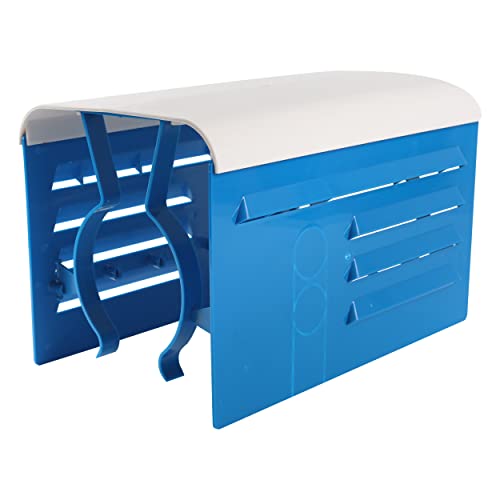
TonGass Universal Fit Pool Pump Motor Cover 13.1" x 8.5" x 8.3"
This universal pool pump cover is designed to fit any pool pump and is also pretty cheap.
View on AmazonRelated Products to Compare
As an Amazon Associate I earn from qualifying purchases.
Resin outdoor enclosures
Compare current options, sizes, and materials that may fit this project.
View on AmazonPool pump motor covers
Compare current options, sizes, and materials that may fit this project.
View on AmazonOutdoor privacy screens
Compare current options, sizes, and materials that may fit this project.
View on AmazonBefore buying: Measure your equipment and preserve the ventilation, drainage, electrical access, and manufacturer clearances required for safe operation.