Small Pool Pump Covers
A small cover saves space and can shield a single motor neatly, but close-fitting walls leave little margin for ventilation, plumbing movement, or hand access. Advertised exterior dimensions often overstate the usable room inside.
Measure the basket lid, unions, drain plugs, wiring, hose bends, and the path needed to remove the motor. A cover that is only slightly larger but properly ventilated is usually safer and easier to live with.
Specific Covers and Enclosures to Compare
These products represent different solutions rather than interchangeable versions of the same cover. Compare the intended use first: a compact motor hood, an open privacy screen, a seasonal fabric cover, and a purpose-built acoustic enclosure solve very different problems.
| Product | Best For | Advantages | Limitations |
|---|---|---|---|
| Universal Pool & Spa Pump Motor CoverCompact molded ABS motor shelter | Rain and sun protection for exposed motors | About 13 × 8 × 8.5 inches and marketed for roughly 1/3- to 2-HP motors; snap-together construction. | Covers only the motor area, not a complete pump/filter system, and is not a soundproof enclosure. |
| RunNico Pool Pump Motor CoversLightweight ABS motor covers sold as a two-pack | Budget weather protection for small exposed motors | Includes a cut-out template so plumbing openings can be adapted to the installation. | Fit must be measured carefully; lightweight construction needs secure placement and provides little noise reduction. |
| Pssopp Oxford-Fabric Sand Filter Pump CoverSoft fabric cover for above-ground pool filter pumps | Seasonal dust, leaf, and weather protection when equipment is not operating | Flexible fabric can accommodate irregular above-ground equipment shapes. | Do not treat a fitted fabric cover as an operating enclosure unless the product instructions explicitly allow airflow and operation. |
Important: Storage sheds and privacy screens are included as adaptable enclosure ideas, not as automatic approvals for operating pool equipment. Confirm ventilation, drainage, electrical access, heater requirements, and manufacturer clearances before modifying or enclosing the pad.
Measure Moving Parts, Not Just the Motor
Open the pump lid, rotate valves, loosen unions, and identify the space needed to pull the motor straight back. Those movements define minimum useful size.
Allow extra clearance around cooling openings; a shell that clears the housing by an inch may still recirculate hot air.
Choose Access That Does Not Require Lifting Too Much
A compact hinged lid or removable side can expose the whole pump without a large door swing. Keep panel weight manageable and provide a safe way to hold it open.
Avoid designs that require disconnecting plumbing just to remove the cover.
Prevent Heat and Moisture from Concentrating
Small volume heats quickly and leaves less room for airflow. Use protected openings on opposing levels and keep the base able to drain.
Inspect after hot sunny operation and after rainfall. Condensation, repeated thermal trips, or a strong hot-plastic smell indicate the enclosure needs changes.
Confirm the Plan at the Equipment Pad
Measure the real installation, photograph valve positions and access paths, and compare the proposed cover with the manufacturer instructions for every component. Leave more working room when dimensions are uncertain, and favor removable panels over permanently boxing in equipment that will eventually require repair or replacement.
Compact Cover Checks
- Measure lid swing, unions, wiring, and hose bends—not only the motor body.
- Confirm the small enclosure still has enough vent area.
- Make sure the cover can be removed quickly for basket cleaning.
Recommended Products
As an Amazon Associate I earn from qualifying purchases.

Salcod Pool Pump Cover for Outside Units, UV-Resistant ABS, White
This is an affordable metal pool pump cover that looks good and reflects heat.
View on Amazon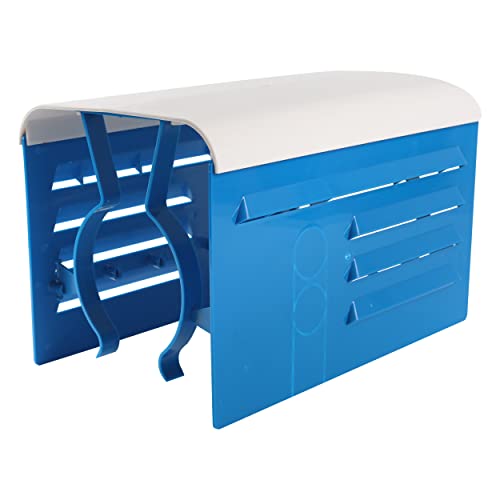
TonGass Universal Fit Pool Pump Motor Cover 13.1" x 8.5" x 8.3"
This universal pool pump cover is designed to fit any pool pump and is also pretty cheap.
View on Amazon
Pool Pump Covers for Outside Units, ABS Adjustable Pools Motor Cover
This is a good adjustable pool pump cover at a cheap price.
View on Amazon