Weatherproof Pool Pump Covers
Outdoor-rated pool equipment can tolerate normal exposure, but direct rain, sprinkler spray, intense sun, salt air, and windblown debris still shorten the life of finishes, fasteners, seals, and controls. A weatherproof cover should redirect those hazards rather than seal the equipment inside a damp box.
The most effective design combines a sloped top, protected ventilation openings, drainage below the enclosure, corrosion-resistant hardware, and anchoring suited to the site. Local weather matters more than a broad “all-weather” label.
Specific Covers and Enclosures to Compare
These products represent different solutions rather than interchangeable versions of the same cover. Compare the intended use first: a compact motor hood, an open privacy screen, a seasonal fabric cover, and a purpose-built acoustic enclosure solve very different problems.
| Product | Best For | Advantages | Limitations |
|---|---|---|---|
| Universal Pool & Spa Pump Motor CoverCompact molded ABS motor shelter | Rain and sun protection for exposed motors | About 13 × 8 × 8.5 inches and marketed for roughly 1/3- to 2-HP motors; snap-together construction. | Covers only the motor area, not a complete pump/filter system, and is not a soundproof enclosure. |
| RunNico Pool Pump Motor CoversLightweight ABS motor covers sold as a two-pack | Budget weather protection for small exposed motors | Includes a cut-out template so plumbing openings can be adapted to the installation. | Fit must be measured carefully; lightweight construction needs secure placement and provides little noise reduction. |
| Keter Store-It-Out MAX 1200LFront-and-top-opening weather-resistant resin store | Adaptable large enclosure shell where extensive modification is practical | Wide front doors and a lifting lid can provide useful access around compact equipment. | Not designed as an operating pump enclosure; it requires engineered ventilation, plumbing cutouts, anchoring, and equipment-clearance review. |
| Pssopp Oxford-Fabric Sand Filter Pump CoverSoft fabric cover for above-ground pool filter pumps | Seasonal dust, leaf, and weather protection when equipment is not operating | Flexible fabric can accommodate irregular above-ground equipment shapes. | Do not treat a fitted fabric cover as an operating enclosure unless the product instructions explicitly allow airflow and operation. |
Important: Storage sheds and privacy screens are included as adaptable enclosure ideas, not as automatic approvals for operating pool equipment. Confirm ventilation, drainage, electrical access, heater requirements, and manufacturer clearances before modifying or enclosing the pad.
Match the Roof and Openings to Wind-Driven Rain
A shallow decorative lid may block vertical rainfall yet allow water to blow through side openings. Use overlapping louvers, protected vent paths, a sloped roof, and drip edges that discharge beyond the pad. Avoid roof runoff landing on conduit, controls, or the motor fan opening.
In coastal or exposed locations, inspect fasteners and coatings regularly. Salt, fertilizer, and pool chemicals accelerate corrosion even when the main panels look intact.
Plan Drainage Before Adding Walls
The equipment pad must remain able to drain. Solid walls placed directly on concrete can trap runoff, leaves, and leaking water around electrical equipment. Raised lower edges or deliberate drainage gaps allow water to escape while still blocking debris.
Check the site during actual rain or with controlled hose testing away from electrical parts. Water should move away from the enclosure, not collect behind it.
Secure the Cover for Severe Weather
Light resin panels and removable roofs can become windborne unless the manufacturer-approved anchoring points are used. Fasten the enclosure to a suitable base and use latches that cannot vibrate open.
Where snow or falling branches are possible, verify roof-load expectations. A weather cover is not automatically a storm shelter or a substitute for seasonal equipment preparation.
Direct Water and Seasonal Hazards Away from the Equipment Pad
A sloped top, drip edge, raised lower frame, and clear drainage route matter more than sealing every gap. Keep runoff away from controls and motors, secure loose panels before high winds, and follow the equipment manufacturer’s winterizing procedure. A cover cannot substitute for draining, circulation, heat, or professional freeze protection where those measures are required.
Weatherproofing Checks
- Make sure runoff sheds away from the motor, controls, and conduit.
- Choose hardware and panels that tolerate UV, chlorine, moisture, and wind.
- Inspect drainage and ventilation after heavy rain.
Recommended Products
As an Amazon Associate I earn from qualifying purchases.
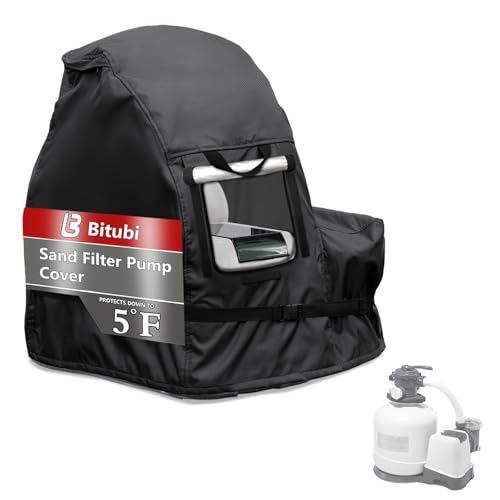
Bitubi Sand Filter Pump Winter Cover with Plush Lining,Waterproof Above Ground Pool Pump Cover, Protects from Severe Snow and Intense Sun (Universal Style,Black)
If you have a sand filter pool pump this pump cover is what you need.
View on Amazon